Financial Management for Small Business
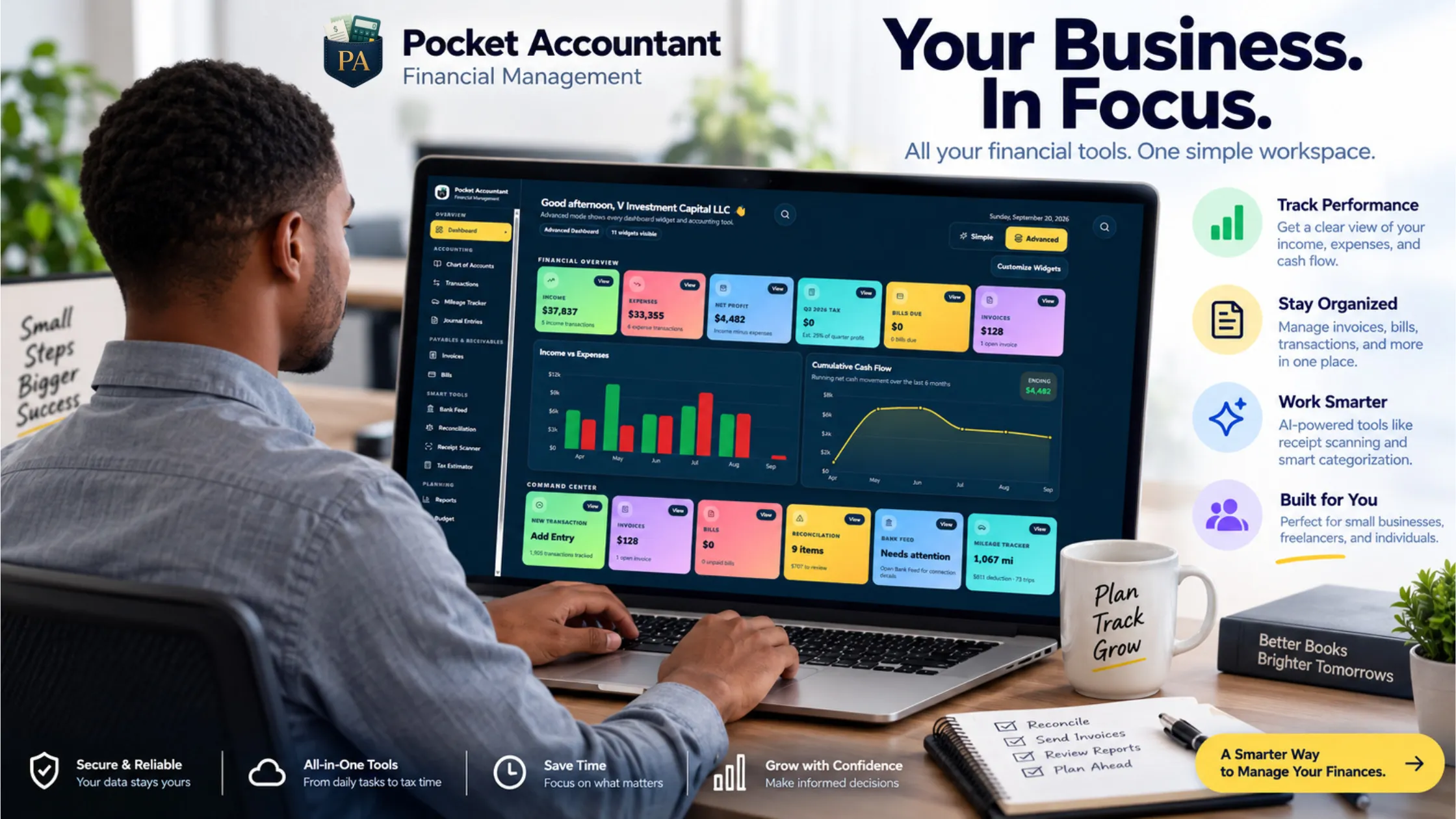
Financial management can make or break a small business: only about half stay open five years, and just a third make it to ten. Pocket Accountant helps tip the odds in your favor with AI-powered bookkeeping, invoicing, tax estimates, and secure Plaid bank-feed integration.
Financial management for small business owners centers on consistent bookkeeping, expense tracking, and budget comparison. Pocket Accountant consolidates these tasks into one workspace, letting owners record income and expenses, create invoices, manage vendor bills, store receipts, and compare actual results against monthly budgets without juggling multiple disconnected tools.
What Does Financial Management Actually Mean For You?
Real financial management means far more than glancing at sales totals each week. It's an umbrella term covering thorough bookkeeping, accurate projections, financial statements, and access to business financing. Skip any one piece, and the whole picture stays incomplete.
That broader view matters because the stakes are steep. Only about half of small businesses survive five years, and just a third reach the ten-year mark. Solid finance and financial management habits are part of what separates the businesses that last from the ones that don't.
Where Should A Small Business Owner Start?
Three moves build the foundation: setting a working budget, lining up credit access before it's needed, and opening a dedicated business bank account for expenses like payroll. None of these require advanced training. They just require consistency.
- Start a realistic monthly budget
- Secure a line of credit early
- Separate business and personal banking
How Does An Accounting Platform Fit In?
Financial accounting and management accounting work best when tracked in one place instead of scattered across spreadsheets and apps. Pocket Accountant gives small-business owners a single workspace for recording financial activity and seeing how the business performs, without hopping between disconnected tools. That kind of consolidated financial accounting management turns raw numbers into decisions worth trusting.

How Do You Track Income And Cash Flow?
Small business owners track income and cash flow by logging every transaction in one central system rather than scattered spreadsheets. Financial management starts with recording income, expenses, transactions, and journal entries in one place. That habit forms the backbone of accurate books. Skip this step, and month-end reconciliation turns into a guessing game.
Manual entry eats hours that could go toward serving customers. Connecting bank accounts through a provider like Plaid changes that equation by pulling in transactions and balances automatically. No more typing every coffee run or client payment by hand.
What role does AI play in categorizing transactions?
Financial accounting management gets a lot easier when software sorts charges for you. AI-powered categorization helps interpret financial data and assign transactions to the right bucket, cutting down on the guesswork that trips up busy owners juggling multiple roles.
Why does consistent bookkeeping matter for daily operations?
Bookkeeping isn't just a tax-season chore. The Small Business Administration notes that maintaining proper bookkeeping keeps a business running smoothly day to day, affecting everything from vendor payments to payroll timing.
Solid finance and financial management habits also mean reports are ready when needed:
- Profit and loss statements
- Balance sheets
- Cash flow reports
- Aging reports
Generating these in seconds gives owners the same numbers a CPA would ask for — no scrambling required. That kind of financial accounting and management accounting discipline turns raw transaction data into decisions owners can actually trust.

What Tools Keep Taxes And Data Secure?
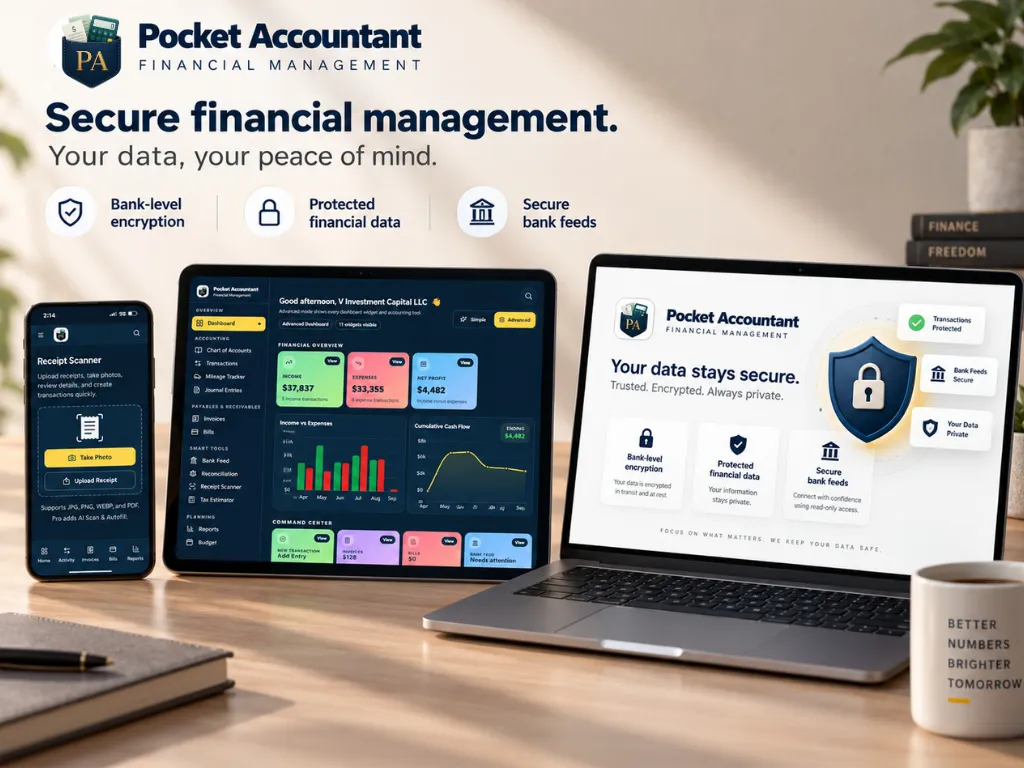
Tax readiness and data protection rest on a specific toolkit, not luck. Pocket Accountant pairs tax-estimate tools with strong technical safeguards, covering both sides of that equation under one roof. Federal, state, and local tax obligations apply to every business, so treating tax estimates as an afterthought creates unnecessary risk down the road.
What Features Handle Day-To-Day Tax Prep?
A customizable chart of accounts anchors the toolkit, working alongside bank-feed workflows, receipt scanning, mileage tracking, reconciliation, tax-estimate tools, and export options. These pieces work together instead of living in separate apps.
- Customizable chart of accounts for organizing income and expenses
- Bank-feed workflows that pull in transactions automatically
- Receipt scanning and mileage tracking for deduction-ready records
- Reconciliation tools to keep books accurate
- Tax-estimate tools built for ongoing obligations, not just year-end
How Does Pocket Accountant Protect Financial Data?
Encryption and technical safeguards protect the numbers behind every report. That protection matters as much as accuracy itself, since a business can't afford exposed bank feeds or unsecured customer records. Professional invoices and organized customer files add a layer of polish, too, helping a small operation read as established rather than makeshift. Together, these tools support genuine financial management—budgets, reconciliations, tax estimates, and customer-vendor records, all handled in one connected workspace built for finance and financial management on a small-business scale.
Conclusion
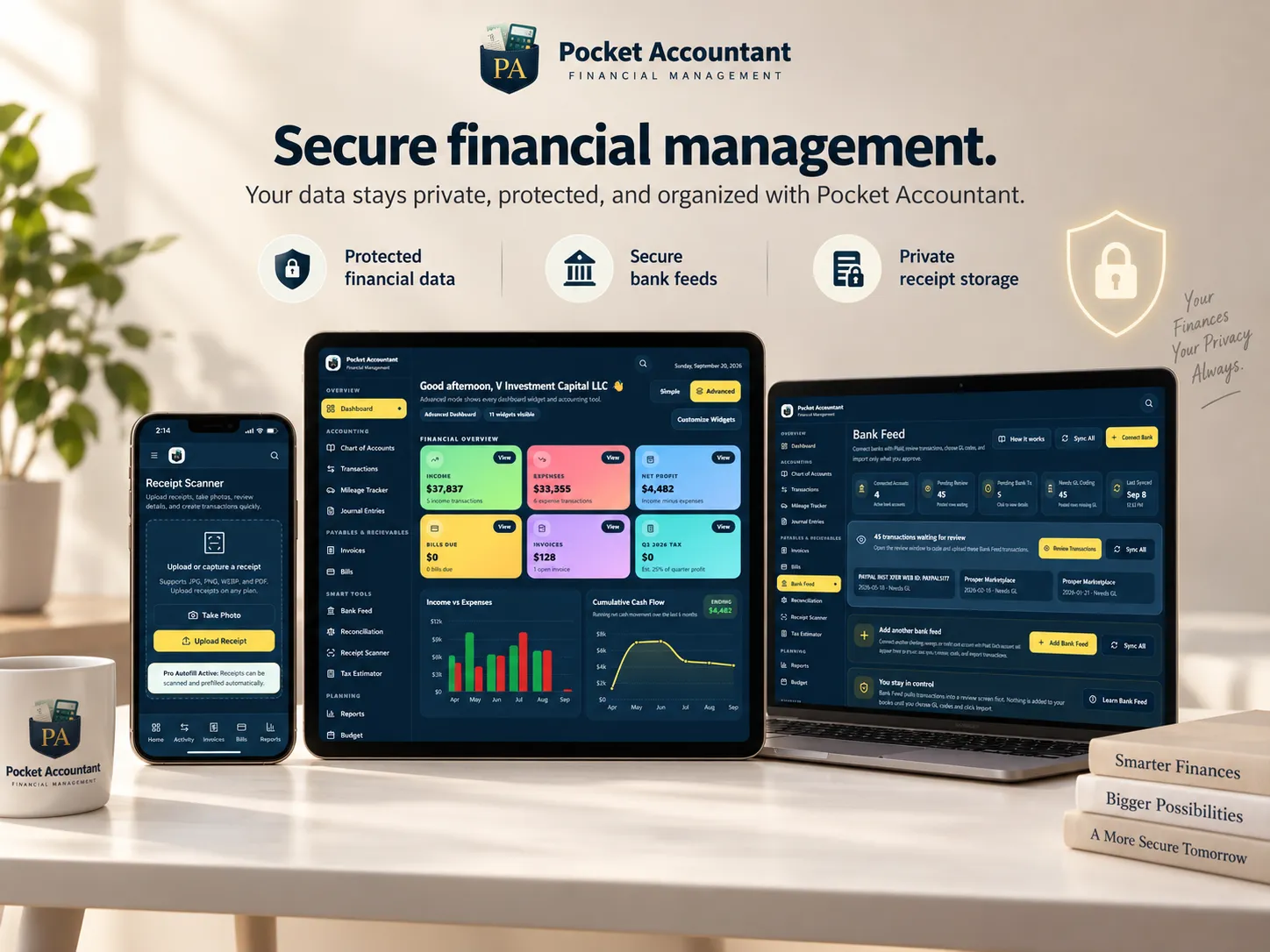
Managing small business finances gets a lot less daunting with the right approach in place. Tracking income and expenses, staying on top of invoices and bills, and keeping records organized all add up to a business built to last. The right tools make the difference, especially ones that pair intuitive design with features like AI-assisted categorization and secure bank connections. With a reliable system handling the numbers, owners are free to focus on what matters most: growing the business.