Recording Deductible Business Exp. : General Booking Basics
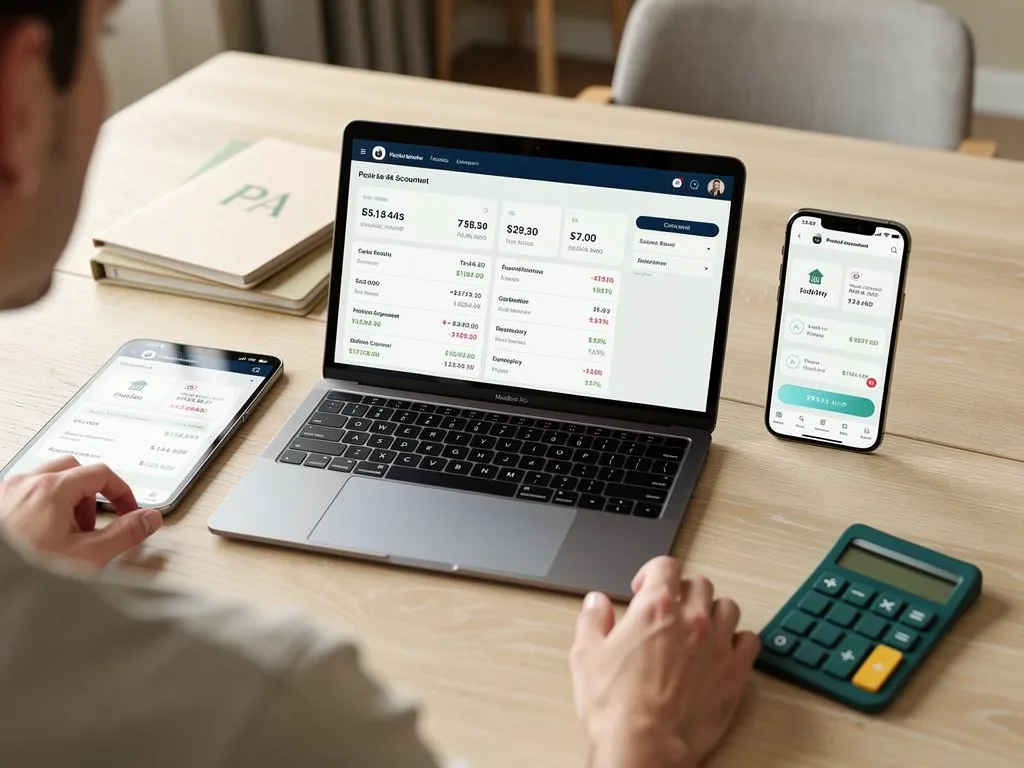
Knowing how to record deductible business expenses comes down to one simple habit: log every transaction as it happens—the date, the amount, what it was for, and who you paid—into a dedicated bookkeeping system like Pocket Accountant, which keeps your income, expenses, and receipts together in one workspace. This approach to bookkeeping for small business keeps your records simple and easy to stand behind at tax time. Your business checking account is the main source for these entries, and every expense you record should have a receipt attached, so you end up with a clear paper trail when tax time comes around.
Key Takeaways
- Keep records that clearly show your income and expenses using any system suited to your business.
- Document business transactions in your books with a summary that supports your tax deductions.
- Deductible expenses reduce your tax liability when properly recorded and reported on your business return.
- Organize receipts and records by category to prepare accurate financial information for tax filing.
What Counts As A Deductible Business Expense?
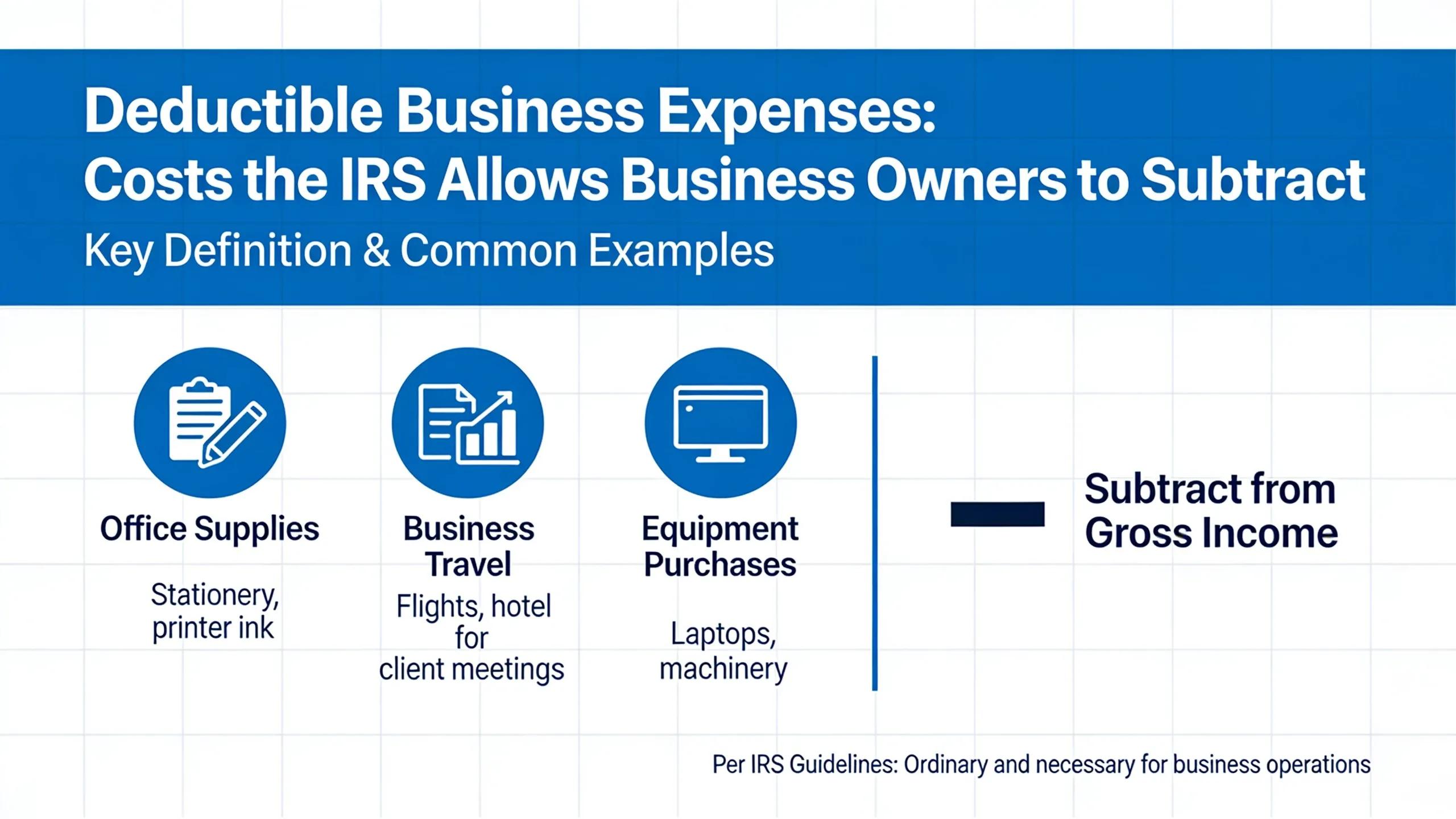
A deductible business expense is any cost the IRS lets business owners subtract from their taxable income, which lowers what they owe at tax time. Miss these small business tax deductions and you could end up overpaying the IRS, since not every expense qualifies. Freelancers, sole proprietors, and independent contractors lose out on real savings every year because they never tracked or claimed costs they were entitled to write off—which is exactly why having a working deductible business expenses list matters if you're running your own operation.
Not every purchase qualifies, though. The expense has to be necessary and appropriate for the type of business claiming it. A graphic designer's software subscription counts, but a personal vacation doesn't. That standard keeps deductions tied to necessary business expenses rather than personal spending.
What Kinds Of Expenses Typically Qualify?
Common deductible categories include:
- Office supplies and equipment
- Software subscriptions tied to daily operations
- Mileage and travel for business purposes
- Advertising and marketing costs
- Professional services like legal or accounting help
Solid general bookkeeping habits make it far easier to catch these costs before they slip through the cracks, and consistent records make it that much simpler to sort and prepare everything for taxes each year.
Pocket Accountant helps with this through comprehensive income and expense tracking, keeping records organized as transactions happen. Receipt scanning captures purchases the moment they happen, so nothing gets lost before you sit down to categorize it.
What Records Do You Need To Keep?
There's no single format for tracking business records. Small business owners can choose any recordkeeping system that suits their operation, as long as it clearly shows income and expenses. That flexibility matters for freelancers and sole proprietors who are often juggling multiple income streams and don't have time for rigid, complicated systems.
Good general bookkeeping habits center on a few core categories. Your books need to show gross income alongside every deduction and credit you claim—that combination forms the backbone of an accurate return. A workable system usually includes:
- Income records (invoices, sales receipts, bank deposits)
- Expense documentation (receipts, bills, statements)
- Records of deductions and credits claimed
What Counts As An Acceptable Recordkeeping System?
Ledgers, spreadsheets, or digital tools all qualify, as long as the output clearly reflects gross income and deductible expenses. The IRS doesn't mandate a specific format—it cares about accuracy and completeness.
How Does Connecting A Bank Account Help With Recordkeeping?
Linking bank accounts through providers like Plaid automatically pulls in balances and bank-feed transactions. Imported transactions arrive ready to review and categorize to the general ledger, which cuts down on manual entry. Financial data connected this way stays protected by state-of-the-art encryption and technical safeguards, keeping sensitive account details secure while making it that much easier to prepare accurate records for taxes.
How Do You Categorize And Track Expenses?
Categorizing business expenses means sorting each purchase into the right bucket—supplies, software, travel, utilities—so your records stay clean and tax-ready. Business expense tracking means capturing every transaction as it happens instead of scrambling for receipts months later. Skip either step and you end up with messy books and missed deductions come tax season.
General bookkeeping is the foundation here: a consistent system for logging income and expenses as they occur. Most accounting tools were built with accountants in mind first, then handed down to everyone else, which leaves plenty of small business owners staring at a long list of expense categories, unsure whether a software subscription belongs under "office supplies" or "professional services." AI-powered features can ease that confusion by scanning transaction data and suggesting where each purchase fits, turning raw numbers into insights that actually make sense.
Why does categorizing expenses matter for taxes?
Well-sorted expenses translate directly into savings. Business owners who take advantage of available write-offs can deduct legitimate costs of running the company and lower their overall tax liability. Clean categories also mean your records arrive in the format your accountant needs, ready for filing without a scramble.
What tools help track expenses year-round?
Reliable tracking includes:
- Receipt capture at the point of purchase
- Ongoing account reconciliation
- Comparing planned spending against what actually gets spent
- Tax estimate tools that project what's owed based on real numbers
FAQ
Do I need a receipt for every deductible expense?
Yes. Pocket Accountant's receipt scanning captures purchases in the moment, so nothing gets lost before categorization.
What qualifies as an acceptable recordkeeping system?
Ledgers, spreadsheets, and digital tools all qualify, as long as the output clearly shows gross income and deductible expenses. The IRS cares about accuracy and completeness, not a specific format.
How does Pocket Accountant support expense tracking?
Pocket Accountant offers comprehensive income and expense tracking, organizing records as transactions happen. It keeps receipts, categorized expenses, and income in one workspace for accurate tax preparation.
Conclusion
Recording deductible business expenses doesn't have to feel like a burden you're carrying alone. When you bring your transactions together in one place, categorize them with a little AI assistance, and capture receipts as they happen, you're not just staying compliant—you're building a clear picture of where your money actually goes. That clarity turns tax season from a scramble into a straightforward conversation with your accountant, and it turns your financial records into something you can actually trust and act on.