Bookkeeping 101: Bookkeeping Basics
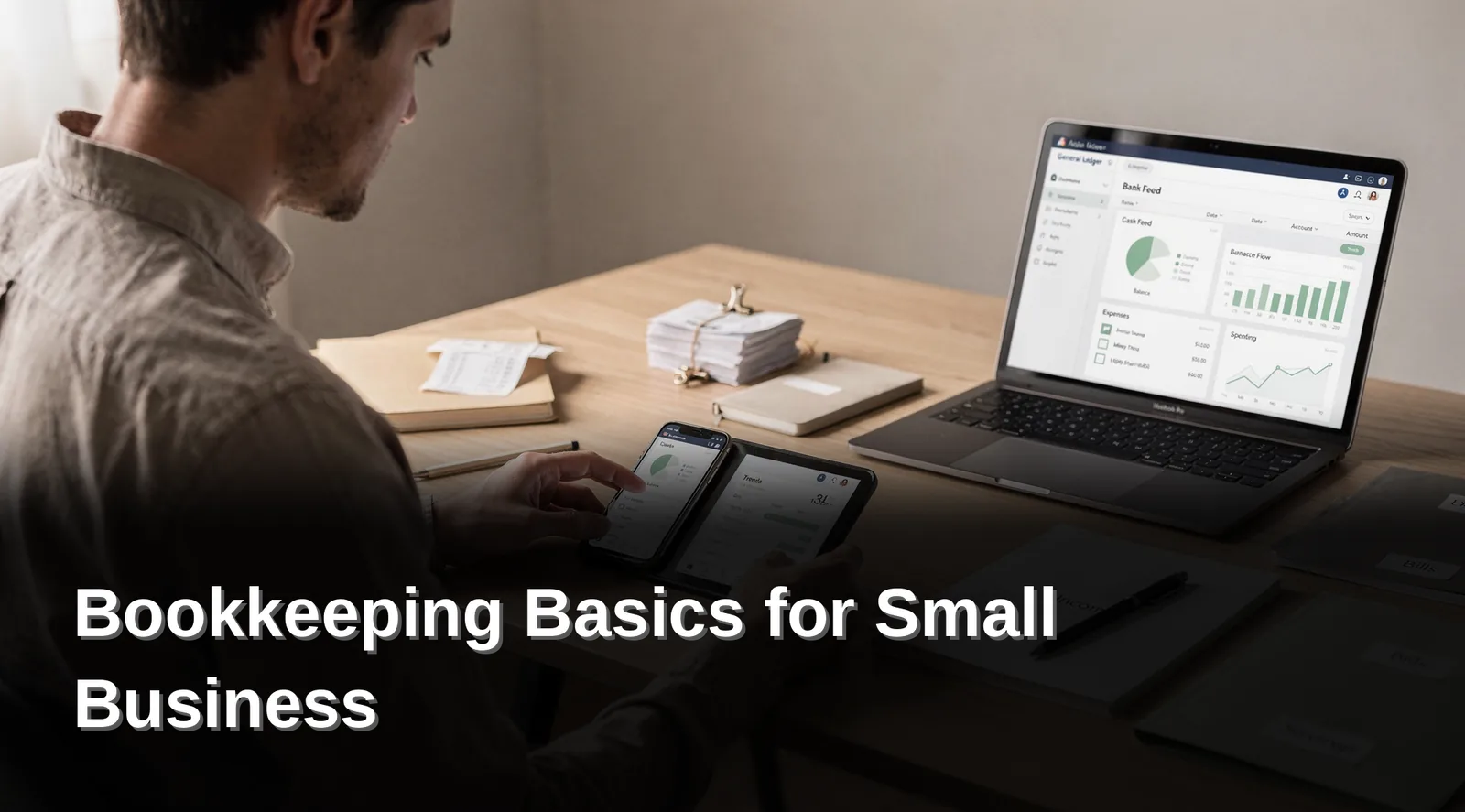
A few things matter most before the first transaction gets logged: a clear grasp
Bookkeeping basics for small business owners come down to four habits: recording every transaction, keeping personal and business accounts separate, tracking income and expenses consistently, and reconciling records every month. Pocket Accountant is built to make those habits stick, giving you one workspace for invoices, bills, receipts, and budgets, so you can trade scattered spreadsheets for financial records that actually make sense.
Key Takeaways
Accurate bookkeeping tracks income and expenses, forming the foundation for tax filing and financial decisions.
Automated bank feeds and AI categorization eliminate manual data entry and reduce errors in expense tracking.
Clear financial reports answer direct questions: profitability, tax obligations, and where your money actually goes.
Organized records in the correct format streamline tax season handoffs with your CPA or accountant.
What Do You Need Before You Start Bookkeeping?
A few things matter most before the first transaction gets logged: a clear grasp of what bookkeeping actually does, a secure way to connect accounts, realistic expectations, and a system for tracking money in and out. Bookkeeping is the system that records, organizes, and tracks every financial transaction a business makes. That foundation supports accurate financial reporting and smooth tax filing later on, so getting it right from day one saves headaches down the road.
Is it normal to feel lost with bookkeeping basics for small business owners?
Yes, and the numbers back that up. Most owners start their businesses without much financial training — nearly half say they had little to none before diving in. Feeling confused at the start doesn't mean something's wrong with you; it just means there's a system still waiting to be built.
Before diving in, small business owners benefit from having these in place:
A secure connection between bank accounts and financial institutions, using trusted providers like Plaid.
A grasp of simple small business bookkeeping principles, rather than complex accounting jargon.
A method for income and expense tracking guide discipline, so every dollar gets recorded.
Confidence that financial data stays protected through encryption and technical safeguards before any account gets linked.
Getting these pieces in place turns bookkeeping from a source of anxiety into a manageable, repeatable routine.
How Do You Track Income and Expenses Step by Step?
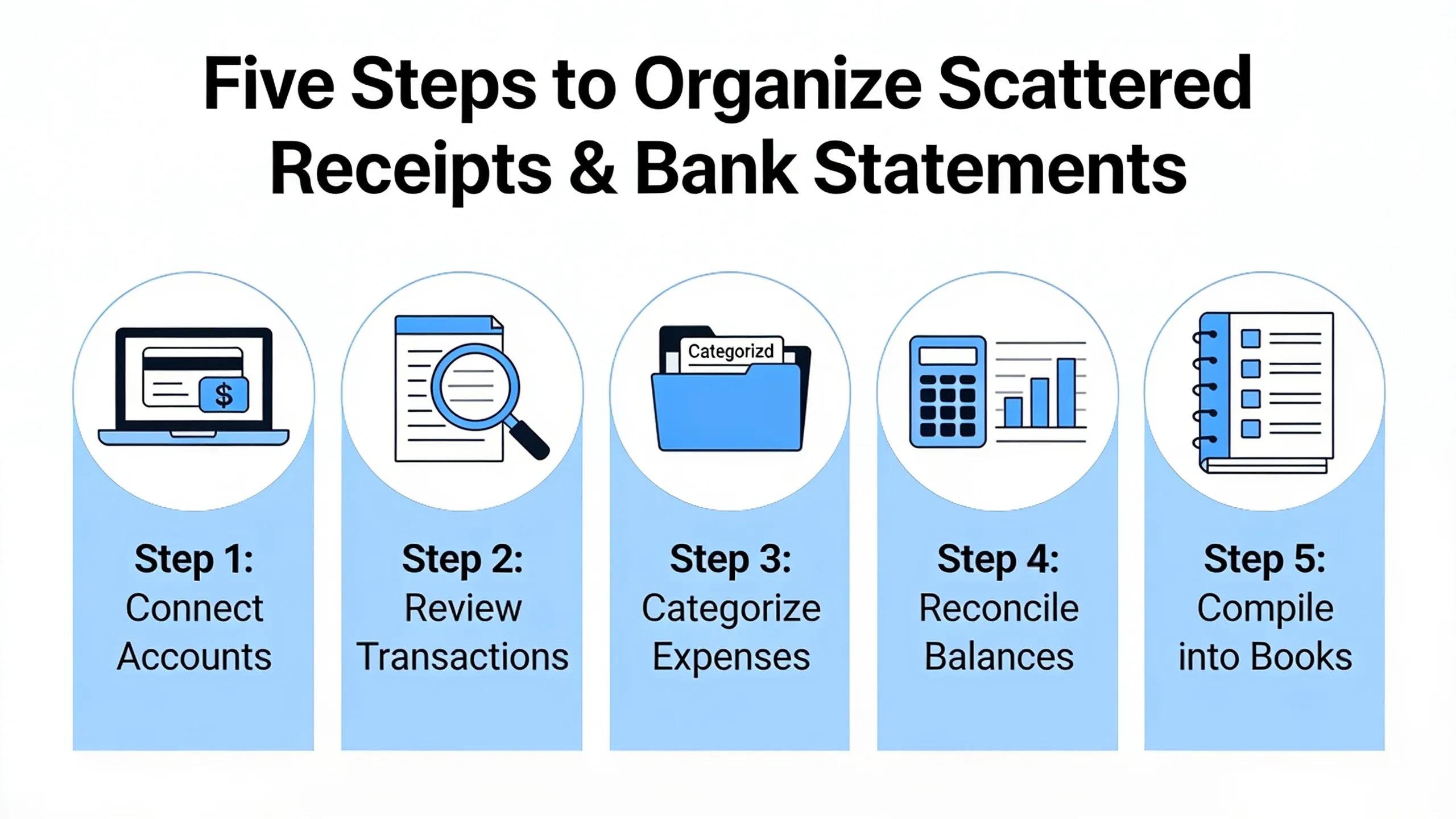
Five steps turn scattered receipts and bank statements into organized books: connect accounts, review transactions, categorize activity, capture receipts, and send invoices. These are the core habits behind any solid income and expense tracking guide, and skipping steps creates gaps that surface at tax time. Freelancers juggling client work rarely have hours to spare for manual entry, so a clear sequence matters more than perfection.
Connect the bank account. Linking a checking or credit card account lets bank feeds pull transactions in automatically, removing the guesswork of manual entry.
Review imported transactions. Bank feeds arrive ready for review, so each entry gets coded to the general ledger before it counts as recorded income or spending.
Categorize each entry. Sorting transactions into consistent categories keeps reports accurate and makes tax season far less stressful.
Scan receipts as purchases happen. Capturing a receipt the moment a purchase occurs, rather than weeks later, means nothing gets missed or forgotten in a shoebox.
Send invoices and log vendor bills. Creating professional invoices and keeping complete customer and vendor records rounds out the daily routine, closing the loop between money coming in and money going out.
How Often Should a Freelancer Update Their Books?
Weekly check-ins work well for most solo operators, since transactions build up fast even with a handful of clients. Waiting until month-end often means forgotten details and rushed categorizing.
What's the Fastest Way to Track Expenses Without Spreadsheets?
An easy bookkeeping app for freelancers swaps manual spreadsheet entry for automatic bank feeds and receipt scanning. That's what simple small business bookkeeping looks like: less repetitive data entry cluttering the daily routine. Of all the practical small business bookkeeping tips out there, automating the connection between bank activity and categorized records is one of the highest-value habits a freelancer can build.
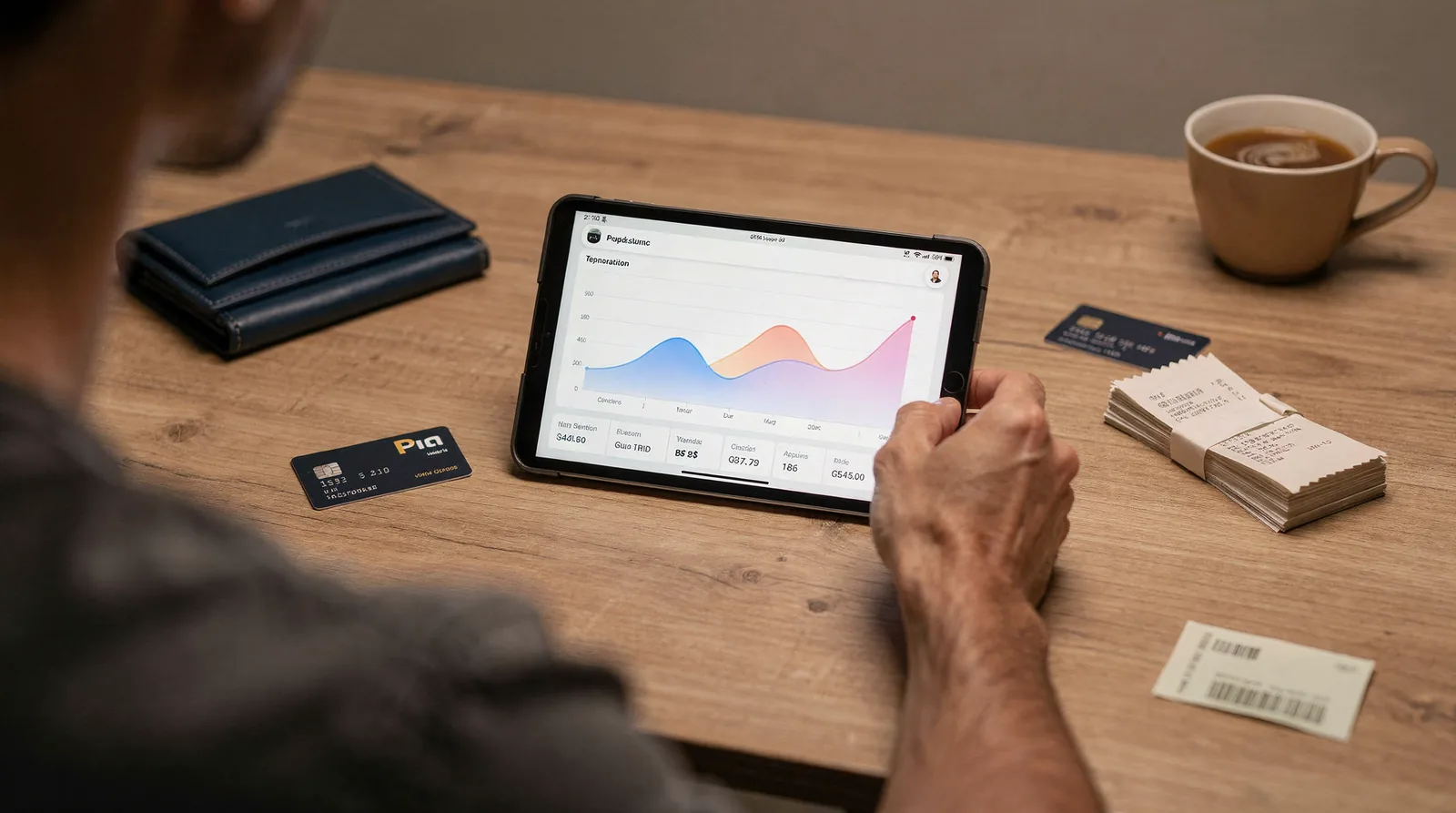
Four habits trip up freelancers and small business owners more than any others. Blending personal
What Mistakes Should You Watch For?
Four habits trip up freelancers and small business owners more than any others. Blending personal purchases with business spending tops the list, since it makes true profit almost impossible to see and clean tax filings even harder to prepare. Skipping bank reconciliation ranks close behind: small errors and missed charges pile up quietly until they're expensive to untangle. And guessing at tax savings instead of estimating from actual income just sets up another round of headaches come filing season.
Why Does Separating Accounts Matter So Much?
Keeping business and personal money in separate accounts makes bookkeeping basics for small business far easier to manage. Mixed spending muddies your expense records and slows down every report that follows.
How Often Should Accounts Get Reconciled?
Regular reconciliation catches discrepancies before they snowball, and pairing that habit with a consistent income and expense tracking guide keeps everything current. Clear financial reports show exactly where a business stands, month after month.
Separate business and personal spending
Reconcile bank accounts on a consistent schedule
Base tax estimates on real, year-to-date numbers
FAQ
What records and documents does small business bookkeeping cover?
Small business bookkeeping covers every financial transaction a business makes, organized into a few key records: invoices sent to customers, bills owed to vendors, receipts for purchases, and budgets that track spending against income. Pocket Accountant brings all of these into one workspace, so instead of juggling scattered spreadsheets, freelancers and solopreneurs have invoices, bills, receipts, and budgets living in a single, organized system. Capturing receipts the moment a purchase happens and logging vendor bills alongside customer invoices keeps the full picture of money coming in and going out accurate and easy to review at any time.
How does an easy bookkeeping app for freelancers cut down manual data entry?
An easy bookkeeping app for freelancers removes manual data entry by connecting bank and credit card accounts through trusted providers like Plaid, then pulling transactions in automatically through bank feeds. Instead of typing each transaction by hand, freelancers review imported activity and let AI categorization sort entries into consistent categories. Receipts get scanned the moment a purchase happens rather than saved for a later catch-up session. Together, these automated habits replace spreadsheet-based tracking, reduce errors, and free up the hours freelancers would otherwise spend on repetitive bookkeeping tasks.
How does organized bookkeeping make tax season easier with a CPA or accountant?
Organized bookkeeping keeps transactions categorized, receipts captured, and accounts reconciled throughout the year rather than reconstructed in a last-minute scramble. When records are kept in the correct format on an ongoing basis, handing everything off to a CPA or accountant at tax time becomes a simple export rather than a search through shoeboxes and spreadsheets. Consistent categorization and monthly reconciliation also mean tax estimates are based on real, year-to-date income instead of guesswork, so filing season brings fewer surprises and less back-and-forth with the accountant.
What security measures protect financial data when linking bank accounts?
Connecting a bank or credit card account for automatic transaction imports relies on trusted providers like Plaid, which handle the secure link between a financial institution and the bookkeeping platform. Financial data stays protected through encryption and technical safeguards before any account gets linked, giving freelancers and small business owners confidence that automating bank feeds doesn't mean sacrificing security. This secure connection is one of the essentials small business owners should have in place before they start bookkeeping, alongside a grasp of simple bookkeeping principles and a consistent income and expense tracking routine.
What's the difference between simple small business bookkeeping and complex accounting software?
Simple small business bookkeeping focuses on the core habits that keep records accurate: recording every transaction, separating personal and business accounts, tracking income and expenses consistently, and reconciling monthly. Complex accounting software often buries these fundamentals under dense jargon and features built for larger operations, which is exactly what overwhelms freelancers and solopreneurs who just need clear books. An easy bookkeeping app for freelancers strips this down to automated bank feeds, AI categorization, and one workspace for invoices, bills, receipts, and budgets, making the essentials manageable without requiring an accounting background.
How do financial reports help with everyday business decisions?
Clear financial reports translate raw transactions into answers to the questions small business owners actually ask: how profitable the business is, what's owed in taxes, and where the money is actually going. Because every transaction is recorded, categorized, and reconciled, these reports reflect real, year-to-date numbers rather than rough estimates. That accuracy turns bookkeeping from a rearview-mirror chore into a decision-making tool, helping freelancers and solopreneurs decide when to invest, save, or adjust spending with confidence instead of guesswork.
Conclusion
Solid bookkeeping comes down to having the right support behind you, so you can focus on what you actually do best. When your books are organized, your transactions are categorized automatically, and your financial picture is clear, the worry about money starts to fade and better decisions come easier. That's the whole point: giving you back the time and peace of mind you deserve.